






Malaba Border Goes Solar as KRA Targets 90% Power Cost Cut and Faster Cargo Clearance
Kenya’s busiest land border – Malaba – is about to get a upgrade that will make a big difference in how trade flows through East Africa.
The Kenya Revenue Authority (KRA) have partnered up with TradeMark Africa (TMA) and the Swedish government to bring some much-needed solar power to the Malaba One-Stop Border Post. And for years, one of the biggest problems at this border post was pretty well-known : the electricity just wasn’t reliable.
Power cuts, sometimes going on for as long as 8 hours, would come and go and really slow trade down. Trucks would stall, systems would freeze and in the gaps, all sorts of problems would creep in – from dodgy smuggling to insecurity and frustration. But now officials say that’s all about to change.


A Cost Cut That Could Change Everything
The numbers speak for themselves. With the new solar setup in place, the power costs at Malaba are expected to chop down by as much as 90% that’s a big deal for the border post, which sees huge traffic coming through on the Northern Corridor. Less money spent on power means operations get a lot more streamlined – and with a bit of luck, goods get moving a whole lot faster.
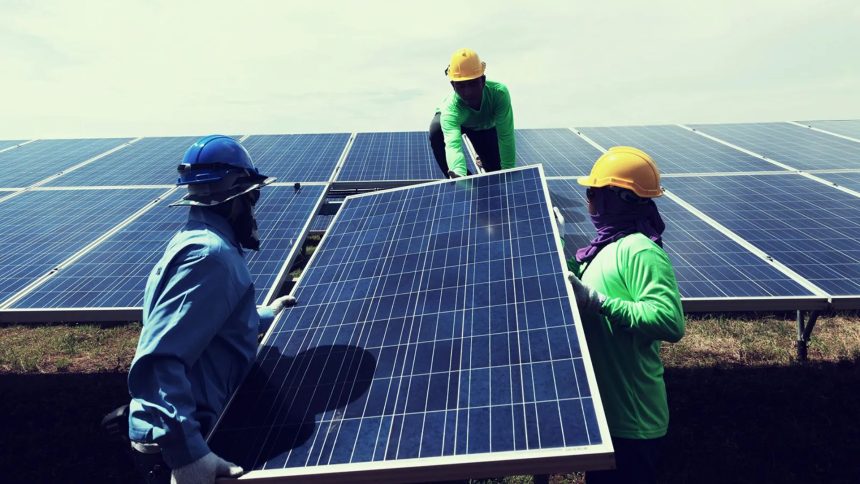
The solar system is a bit more sophisticated than your bog-standard setup – it’s a hybrid affair with battery storage, so things keep running even when the sun dips below the horizon. And it pumps out a neat 233,000 kilowatt-hours a year – that’s enough to meet about 78% of the place’s energy needs.



In simple terms – less reliance on the national grid, fewer of these power outages, and a much smoother workflow.
Power Outages Had Real Consequences
Before all this, power cuts were more than just a bit of a nuisance – they actually had some serious knock-on effects.
Customs processing would come to a crawl, cargo scanning would stall and security systems would just switch off. Even the lights wouldn’t work properly, which was a serious concern for the traders who’d be moving around the border.
To keep things going, the place was having to rely on a pretty pricey diesel generator – burning through about 700 litres of fuel every month. Costly, unpredictable and not exactly kind to the environment.



Sweden Backs Green Trade Infrastructure
At the launch, the Swedish Ambassador to Kenya, Håkan Åkesson, painted a picture that went way beyond just plugging an energy gap.
“It’s a no-brainer really, that putting in solar infrastructure shows how investing in green projects can boost trade, knock emissions, and just generally get the job done when it comes to public services. It also shows that Sweden and Kenya are on the same page when it comes to transforming our economies in a way that’s good for the planet. We think it’s pretty cool to be working alongside Kenya to build a modern, resilient, and climate-smart infrastructure that’s just getting better as trade grows and we get more integrated regionally. – to us, it’s not just a new solar install – it’s a bit of a banner that says to everyone that we’re actually serious about making Kenya and East Africa a greener, more prosperous place.”
More Predictable Trade, Fewer Delays
KRA already seems to be getting some of the benefits.
“Now that we’ve got stable power, clearance is much more consistent and there are fewer delays – so goods can get moving a lot more smoothly through the border. And it looks like the shift to solar will knock over 2000 tonnes of carbon off our plate over the next few decades. Plus, we’re not relying on diesel as much, so we’re not getting hit by fuel price fluctuations like we used to. And with the power system in place, we’re seeing much more stable operations at the border. The result is fewer disruptions and better clearance at places like this.” – said Mr Aduwi
Traders are likely to notice the difference – much less waiting around, fewer surprises and just a smoother whole experience
Beyond Malaba: A Wider Push for Efficiency
And Malaba isn’t the only one that stands to gain from this efficiency push
A similar approach has been rolled out to the Moyale One-Stop Border Post along the LAPSSET Corridor, all in the name of boosting trade in that region. But there’s a key difference here – the way the systems are set up.
Before, solar installations at border posts were pretty much standalone affairs – one building, one system, not exactly the most efficient way of doing things.
Now, the power is all generated centrally and piped out across the whole facility – much better. And then there’s the added bonus of solar-powered street lighting, making it a whole lot safer and easier to navigate – especially after dark.
A Small Shift With Big Implications
At first glance, it’s just about switching to solar. But scratch beneath the surface and you’ll see it’s actually a whole lot more than that
Power that you can rely on means trade that you can rely on. And reliable trade? That’s the foundation of economic growth in that part of the world.
If this all works out as planned, Malaba could find itself quietly becoming a model for other places – not just in Kenya, but across the whole of East Africa
In Other News: Equity Bank Named Kenya’s Best Bank 2026 as CEO James Mwangi Wins Top Honour
Malaba Border Goes Solar as KRA Targets 90% Power Cost Cut and Faster Cargo Clearance