





Africa’s IMF Debt Crisis: Top 10 Countries Most Owing in 2026
Africa’s growing dependence on the International Monetary Fund (IMF) is starting to raise questions – and not just about whether it’ll get them out of a tight spot for the time being, but what might come down the line for the continent’s long term economic future.
What used to be viewed as a bit of a safety net is now actually having a pretty profound impact on the way the economy works here. And in some places, it’s even limiting the freedom governments have to make their own decisions about how to run things.
A Dependence That’s Hard to Shake
Right across the continent, more and more countries are turning to the IMF to help get themselves back on track. Economic pressure is piling up – rising debt levels, weak currencies and all the rest – so governments are finding themselves with few other options.

Countries like the Democratic Republic of Congo, Kenya, Ghana, and Senegal are all tied up in either new or ongoing IMF-supported plans. For some, these arrangements have started to feel more like a nasty habit than a bit of short term relief.
Take the Democratic Republic of Congo for example – they’ve gone back to the IMF just as soon as they finished the last program they were on – which suggests that economic growth is still pretty slow, and they’re under a lot of pressure from outside forces.



Guinea-Bissau: A Mixed Picture
Guinea-Bissau is a case in point where you get both the good and the bad when it comes to IMF support.
Just recently, the IMF approved a further $3.2 million in new funding through its Extended Credit Facility. That brings the total amount of support to around $50.8 million since the program was kicked off back in 2023.
In all of this, the IMF is trying to stabilise the public finances, strengthen the way the government runs things, and get the economy growing again – which is exactly what the goal is.
And to be fair, it’s working in some areas. The forecast is for 5.5% economic growth in 2025, and it’s largely down to a big increase in cashew exports – which is good news.


But this hasn’t been a smooth ride by any means.
The IMF has been pretty concerned by some of the slippages in the program. To cut a long story short, they’ve let a few key targets go by the wayside and even tweaked some of the targets to take account of the delays. In the end, they decided to extend the program by another year – now running all the way through to 2026.
When Support Turns Into Pressure
There’s another issue that’s building up in the background which is not exactly getting a lot of attention: the debt repayment issue.
As countries start to pile on one IMF program after another, it starts to get in the way of the government’s ability to pay off some of the other loans they’ve taken on. And that leaves less money to spend on things that really matter – like roads, healthcare and schools – the sort of things that make a real difference to people’s lives.
For countries that are already struggling under a big weight of external debt, this is only making things a whole lot worse. IMF loans aren’t the only loans they’ve got to worry about – there are also bilateral and commercial debts to deal with. And as the IMF loans get added to the pile, it all gets even more on top of them.
Shifting Terms, Longer Timelines
You can’t help but notice how IMF programs seem to change over time.
When targets get missed, the terms get revised and – just like that – the timeline gets extended. Exceptions become more and more common. What starts out as a clear-cut plan then morphs into something completely different – a longer, more flexible (but also more uncertain) kind of arrangement.
In recent weeks alone we’ve seen several African economies either go back to the negotiating table with the IMF or show renewed interest in IMF support.
It’s a clear sign of just how tight their fiscal situations have become.
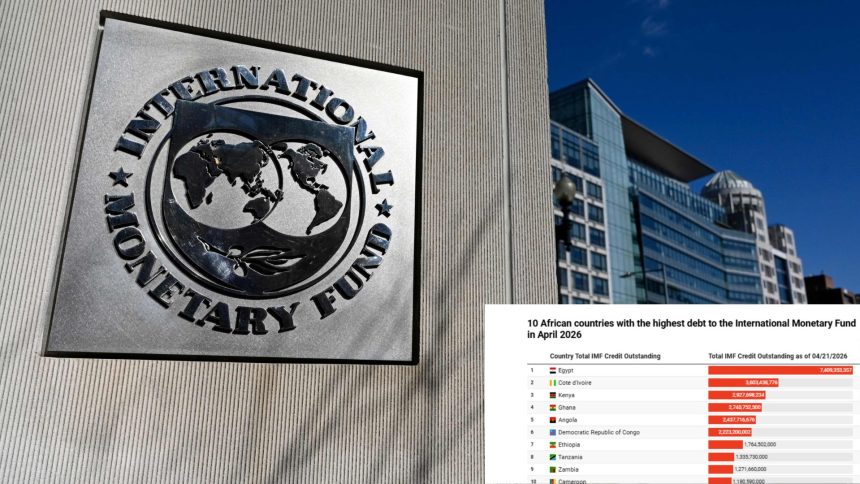
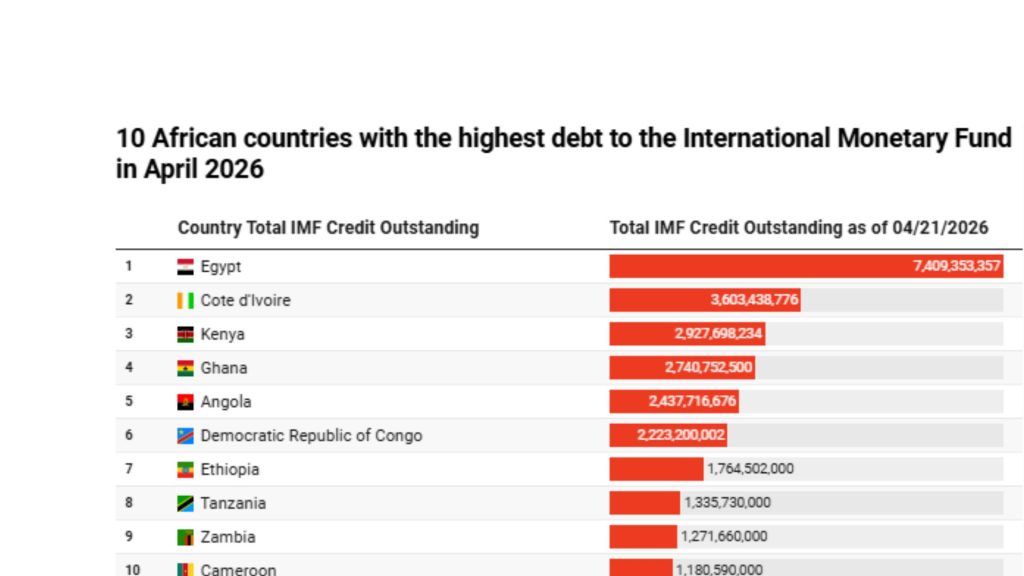
The 10 African Countries with the Highest IMF Debt
Looking at the latest data from the IMF – that’s April 2026, by the way – we find that these countries are carrying the highest amount of debt to the Fund:
What This Means Going Forward
IMF support is still a lifeline for these countries – don’t get me wrong. It gives them a chance to stabilise during a crisis and avoid even deeper economic problems.
But the big question on everyone’s mind is: at what price?
The more they rely on IMF support, the harder they find it to balance immediate financial relief with long-term independence. For many African nations, that’s getting to be a bit of a Catch-22.
In Other News: Inside the Court Battle Over Safaricom Shares That Could Change Kenya’s Future
Africa’s IMF Debt Crisis: Top 10 Countries Most Owing in 2026